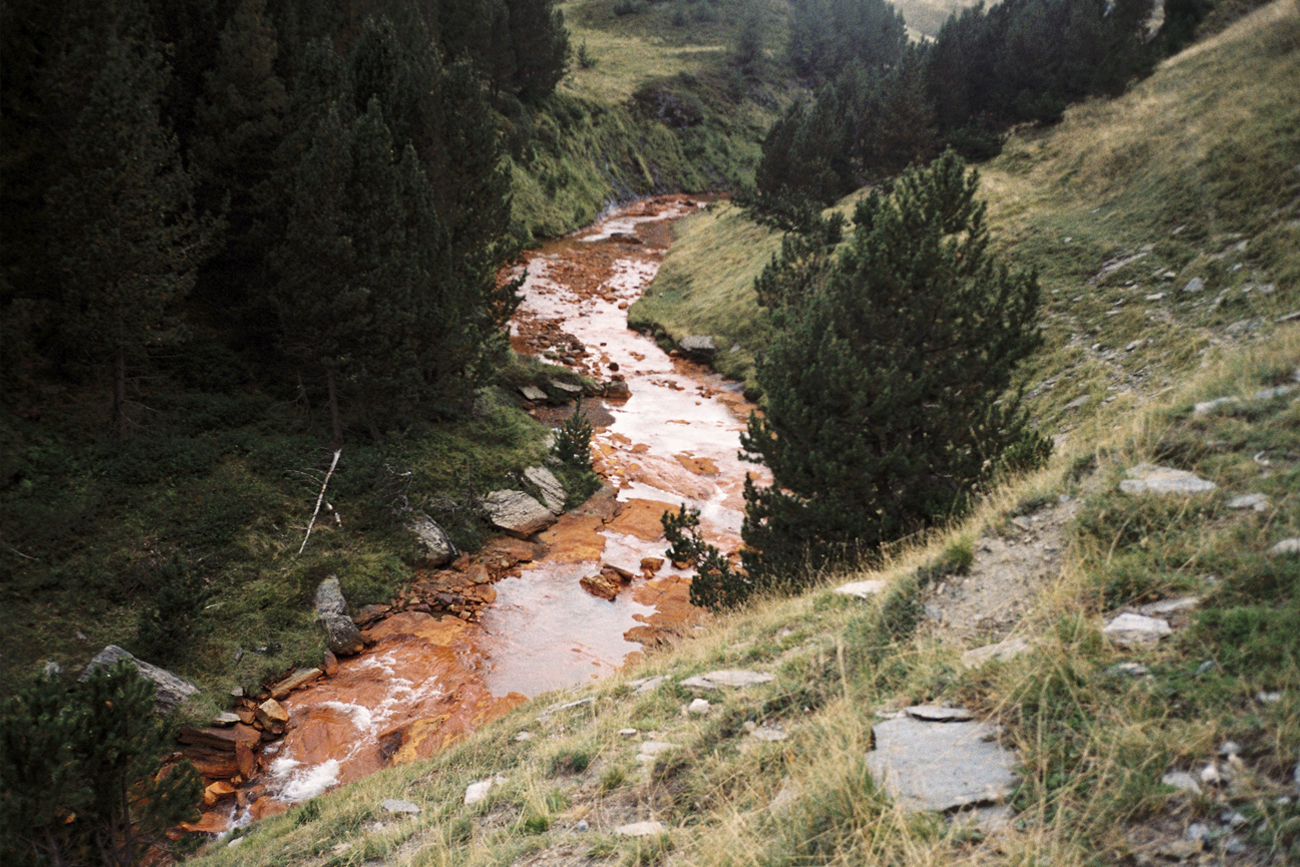
A hierro, 2023-24.
“It smells like iron!” said my friend Sergi when we were coming down from the Mauberme, a craggy peak at the northern end of the Aran Valley, in the Central Pyrenees. To our right the rusty Unhola river rushed down, dyeing everything in its path an orangey red. Further up, from where we came, the mines of Liats and Urets - an old mining operation that once extracted lead and zinc - had opened deep holes in the mountain from which now, helped by rainwater, the iron ores were descending and rusting. It was a much easier descent than what was once necessary to transport the extracted metals, helped by complex systems of pulleys, tracks and iron wagons, abandoned up there and now also rusted. We climbed that Mauberme all out.
Back in Galicia, I go down to a hollow mountain, an open sky from which copper was extracted until the eighties; the controversial mine of Touro and O Pino. It is a huge hole in the mountain that now, more than thirty years later and helped by the use of technosols to accelerate the appearance of vegetation, has become a Reactive Wetland: a landscape sculpted by force with its stepped cliffs and patched with high tech vegetation with a strong smell of sulfur and metal. From the mine slopes, the constant rain sweeps away the acids until they reach rivers like the Portapego, now completely red and turned in some periods into a real clayey quagmire stained with rust, like quicksand, blocking everything in its path. I know because I tried to get close and my legs were blocked up to the knees, so I picked up oxides at that same point of the river and get out of there with an iron determination.s
From these two experiences germinates a series of iron paintings; they emerge from agitated processes engraved in nature itself and that use iron oxide and river water as the only material. Taking the cycle of the water and the river as a visible sign of a brutal transformation of the landscape happened above, at the top of a mountain, operated by the human activity of the metallic mining. ‘Iron’ uses force to drag the wet paintings across the landscape itself, in a process in which the grass becomes a chaotic army of brushes. It rubs against nature and uses it, and yet all that force that is engraved on the surface of the canvas is able to coexist with a certain gentleness thanks to the movement of water, looking for that natural balance. The vegetation is not represented, it is simply there and it is made of iron. Just like the river. Just like the wind and the stratified landscape. Everything is liquid and undulates in a more or less dense movement. The landscape paints itself; ironing out itself.
All the paintings are made with iron oxide and river water on canvas.
Documentation of the work by Carmen Verdú.
– ¡Huele a hierro! – dijo mi amigo Sergi cuando bajábamos del Mauberme, un escarpado pico del extremo Norte del Valle de Arán, en el Pirineo Central. A nuestra derecha se precipitaba oxidado el río Unhola tintando todo a su paso de un rojo anaranjado. Más arriba, de donde veníamos, las minas de Liats y Urets –una antigua explotación minera que en su día extraía plomo y zinc– habían abierto profundos boquetes en la montaña de los que ahora, ayudados por el agua de lluvia, descendían y se oxidaban los minerales de hierro. Un descenso bastante más fácil del que en su día suponía el transporte de los metales extraídos, ayudados por complejos sistemas de poleas, vías y vagonetas de hierro, abandonadas allá arriba y ahora también oxidadas. Aquél Mauberme lo subimos a hierro.
De vuelta a Galicia bajo hasta una montaña hueca, un cielo abierto del que hasta los años ochenta se extrajo cobre; la polémica mina de Touro y O Pino. Es un descomunal agujero en la montaña que ahora, más de treinta años después y ayudado por el uso de tecnosoles para acelerar la aparición de la vegetación, se ha convertido en Humedal Reactivo: un paisaje hecho a hierro con sus lomas escalonadas y parcheadas de vegetación ‘high tech’ con un fuerte olor a azufre y metal. Desde los cortados de la mina, la constante lluvia arrastra los ácidos hasta llegar a ríos como el Portapego, ahora completamente rojo y convertido en algunos tramos en un auténtico cenagal arcilloso tintado de óxido, que a modo de arenas movedizas bloquean todo a su paso. Lo sé porque intenté acercarme y mis piernas quedaron bloqueadas hasta la rodilla, así que recogí óxidos en ese mismo punto del río y salí de ahí a hierro.
A partir de estas dos experiencias germina una serie de pinturas realizadas a hierro; que surgen de agitados procesos grabados en la misma naturaleza y que utilizan como materia únicamente óxido de hierro y agua de río. Tomando el ciclo del agua y el río como proceso visible de una brutal transformación del paisaje sucedida más arriba, en lo alto de una montaña, operada por la actividad humana de la minería metálica. A hierro utiliza la fuerza al arrastrar los cuadros húmedos por el propio paisaje, en un proceso en el que la propia hierba se convierte en un caótico ejército de pinceles. Fricciona con la naturaleza y la utiliza, y aún así toda esa fuerza que queda grabada en la superficie del lienzo es capaz de convivir con cierta delicadeza gracias al movimiento del agua, buscando ese equilibrio natural. La vegetación no está representada, simplemente está ahí y es de hierro. Igual que el río. Igual que el viento y que el paisaje estratificado. Todo es líquido y se ondula en un movimiento más o menos denso. El paisaje se pinta a sí mismo; a hierro.
Todos los cuadros están realizados con óxido de hierro y agua de río sobre lienzo.
Documentado por Carmen Verdú.
- Mine of Touro and O Pino, Portapego river, Galicia. November-February 2023-2024. Documentation by Carmen Verdú.
-
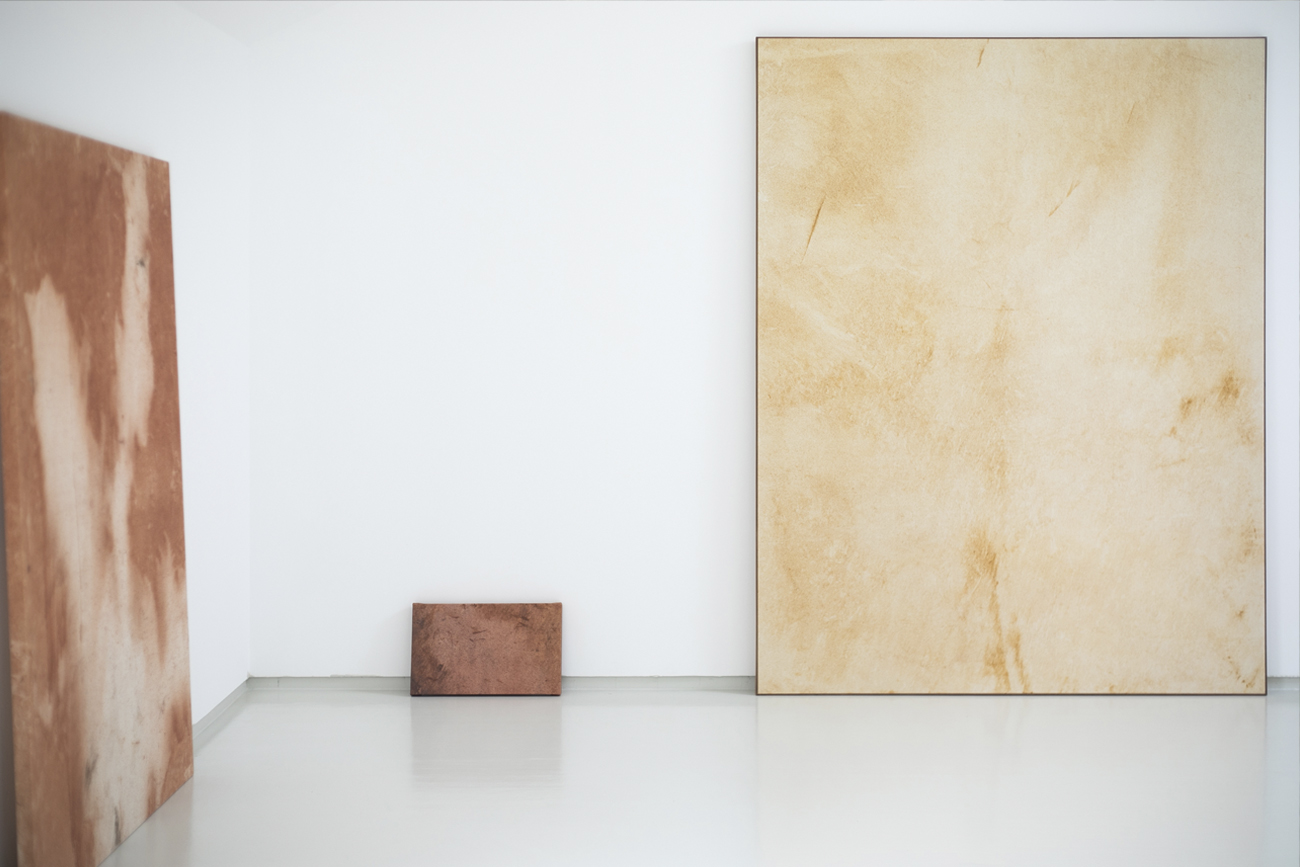 A hierro. Studio view, by Carmen Verdú, 2024.
-
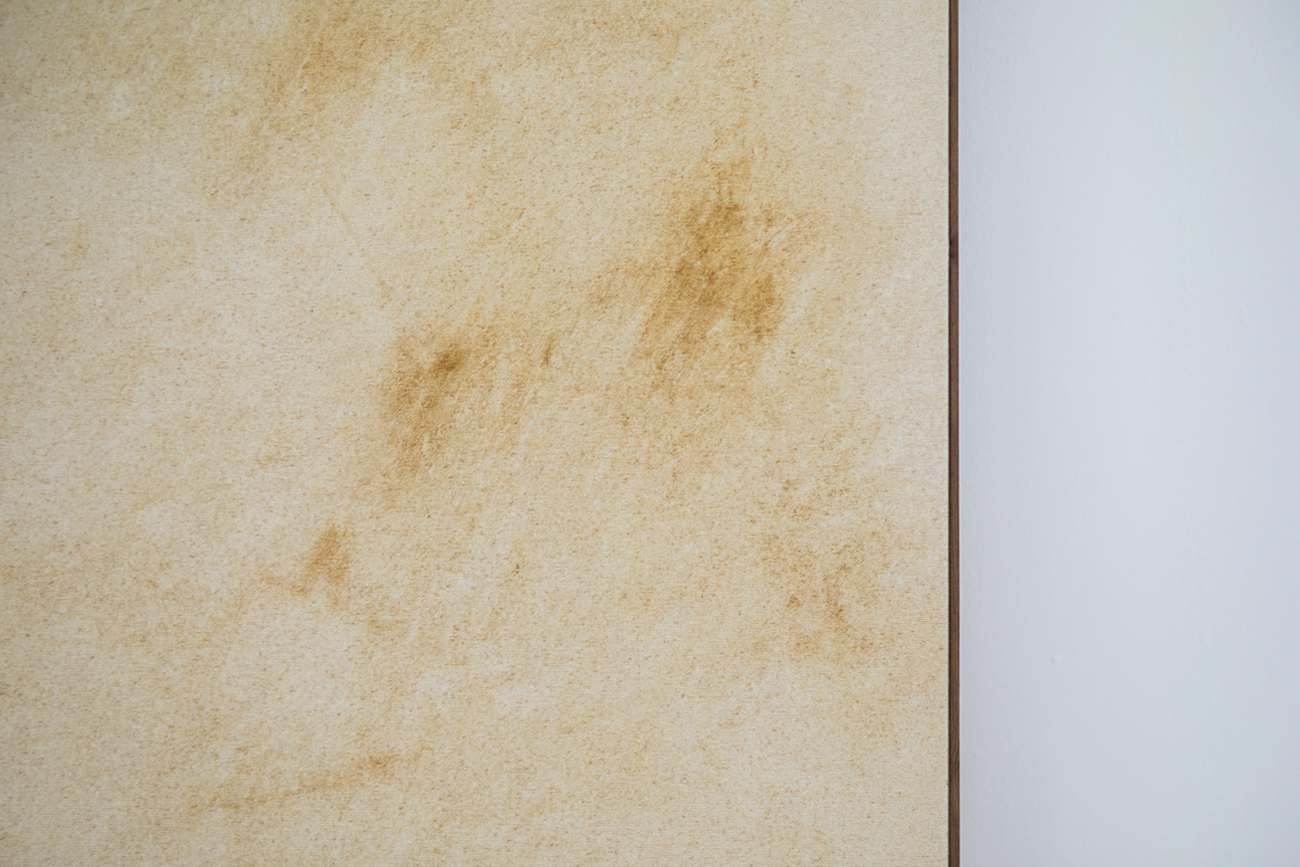 A hierro / 220x170#2. Detail, by Carmen Verdú, 2024.
-
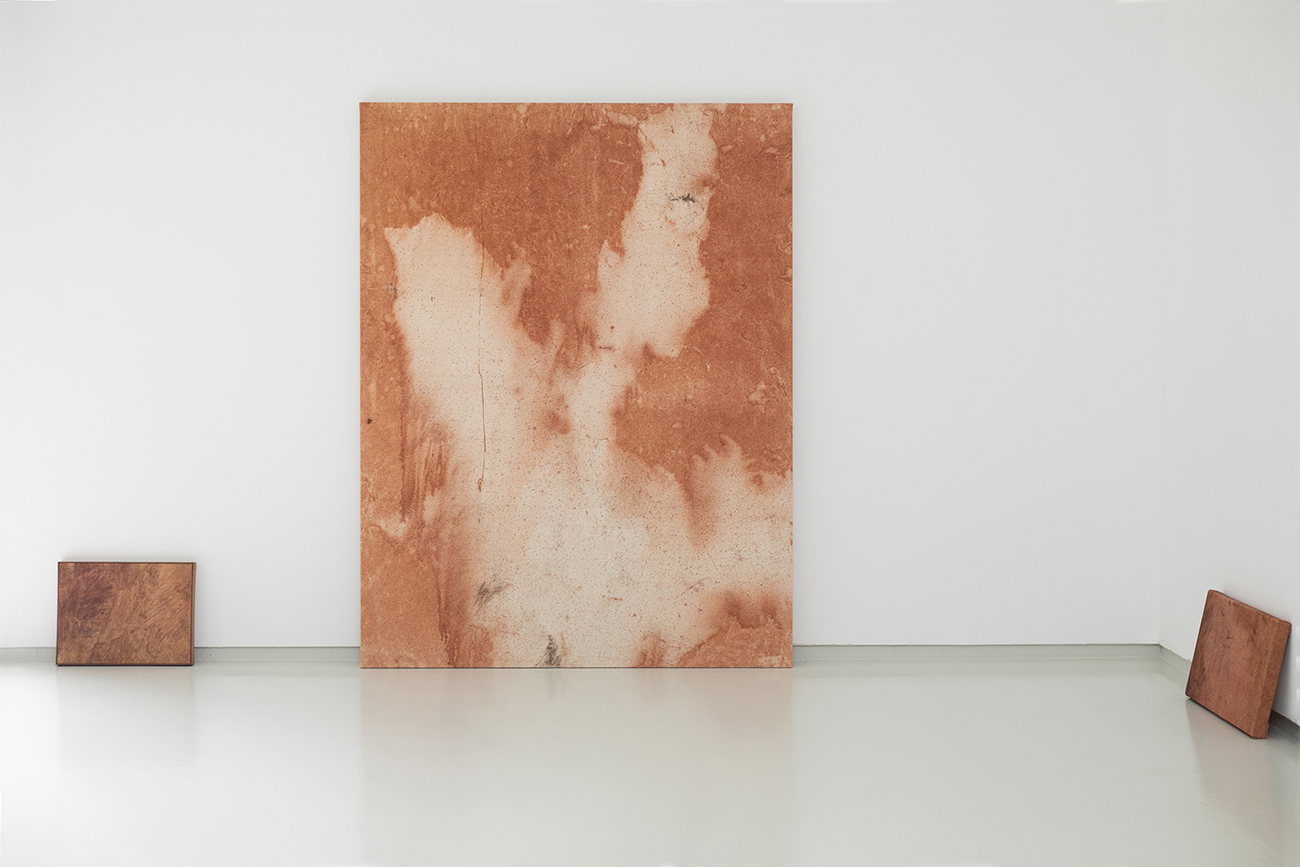 A hierro. Studio view, by Carmen Verdú, 2024.
-
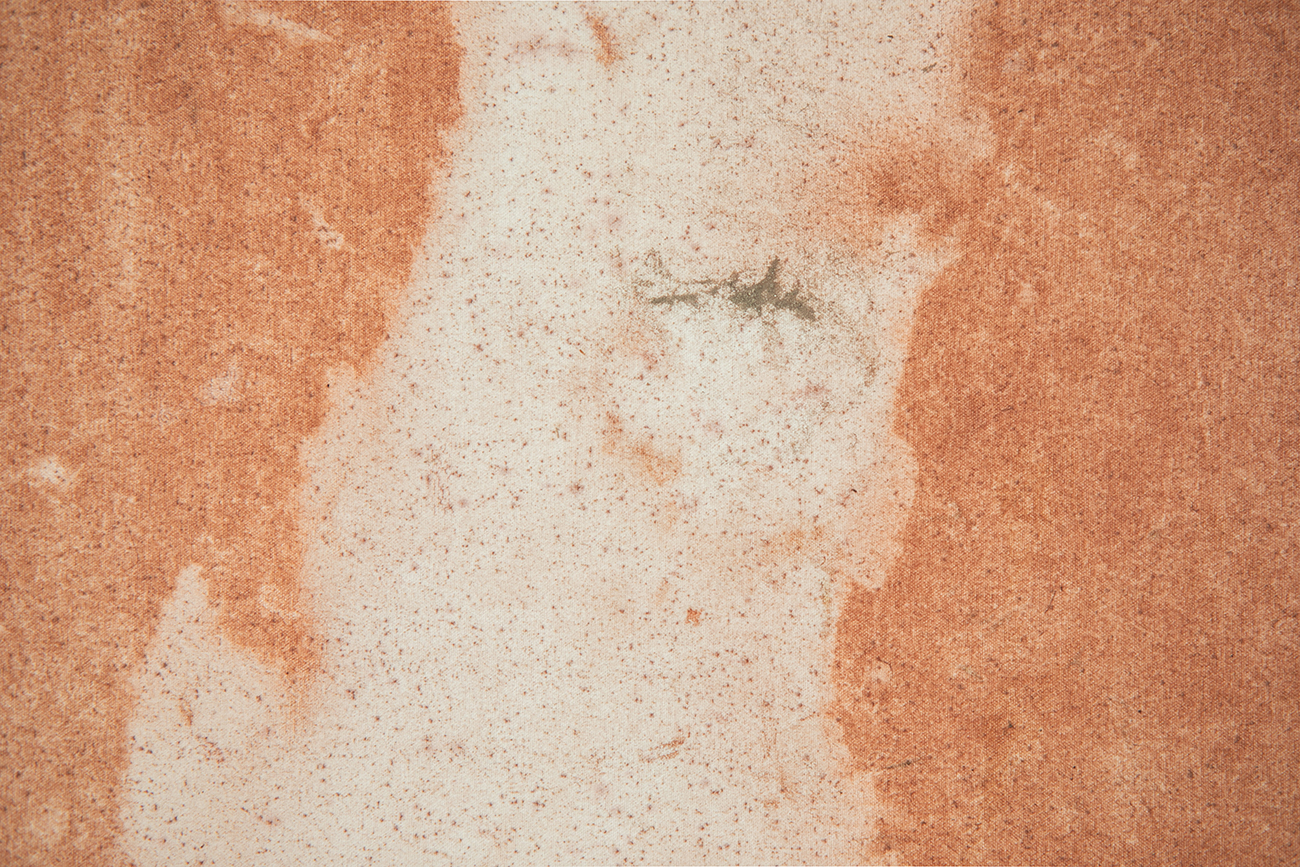 A hierro / 170x130#1. Detail, by Carmen Verdú, 2024.
-
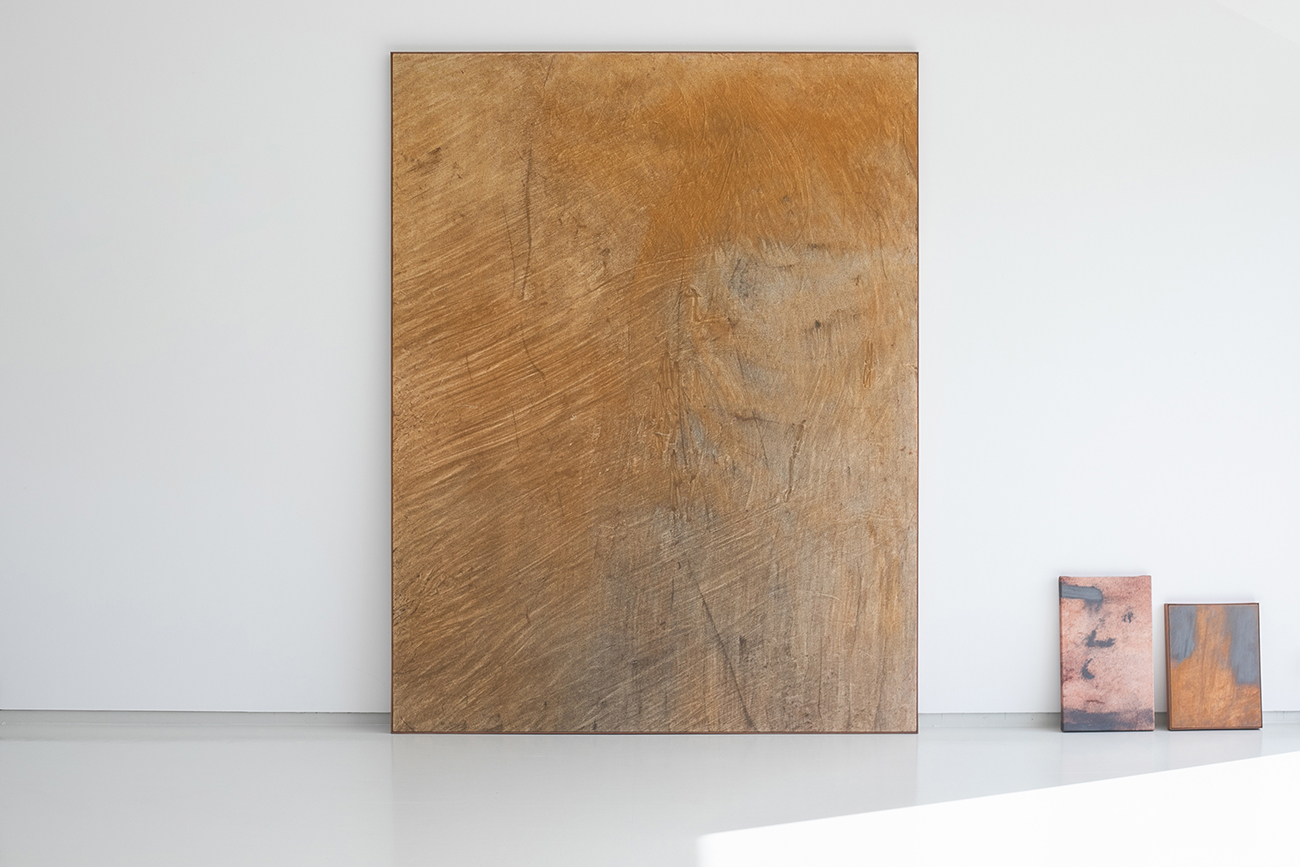 A hierro. Studio view, by Carmen Verdú, 2024.
-
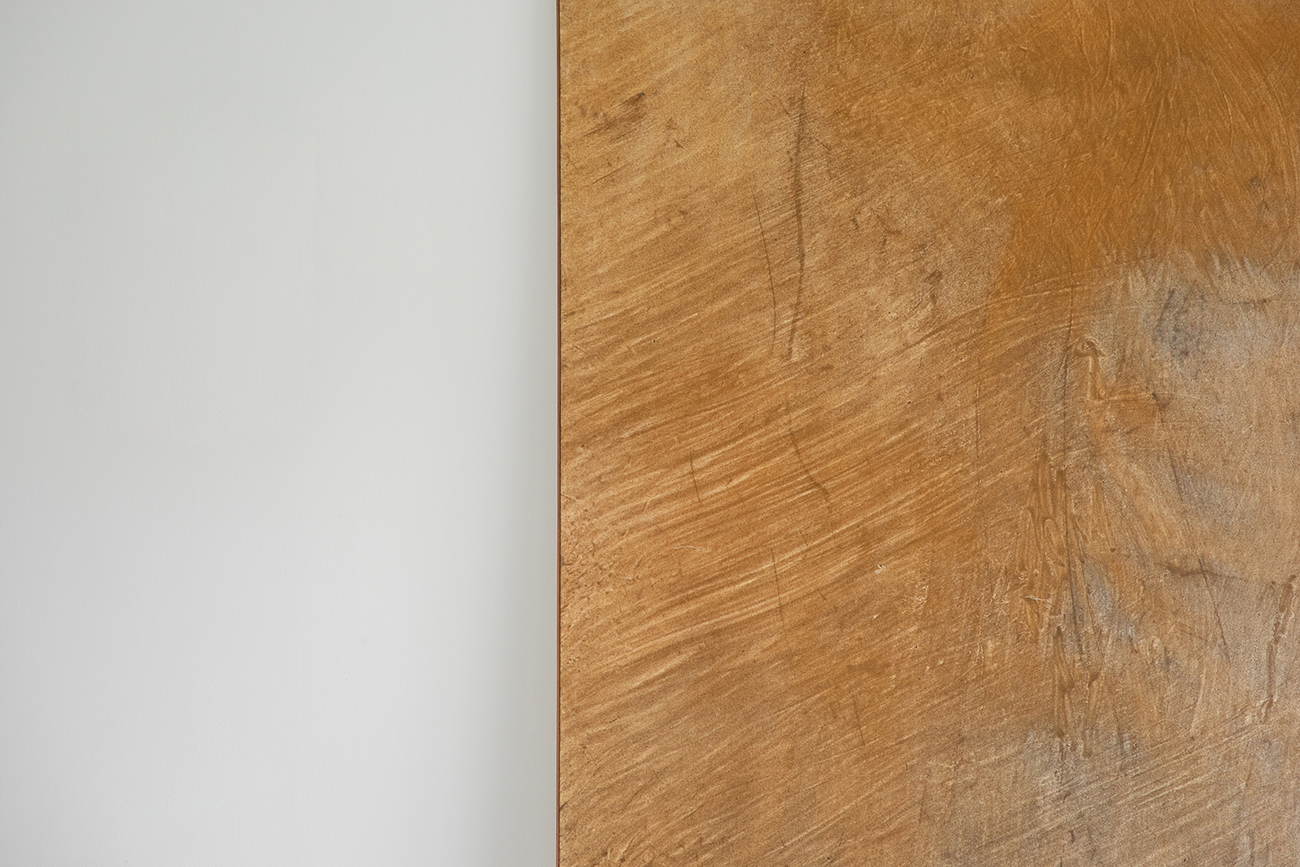 A hierro / 220x170#3. Detail, by Carmen Verdú, 2024.
-
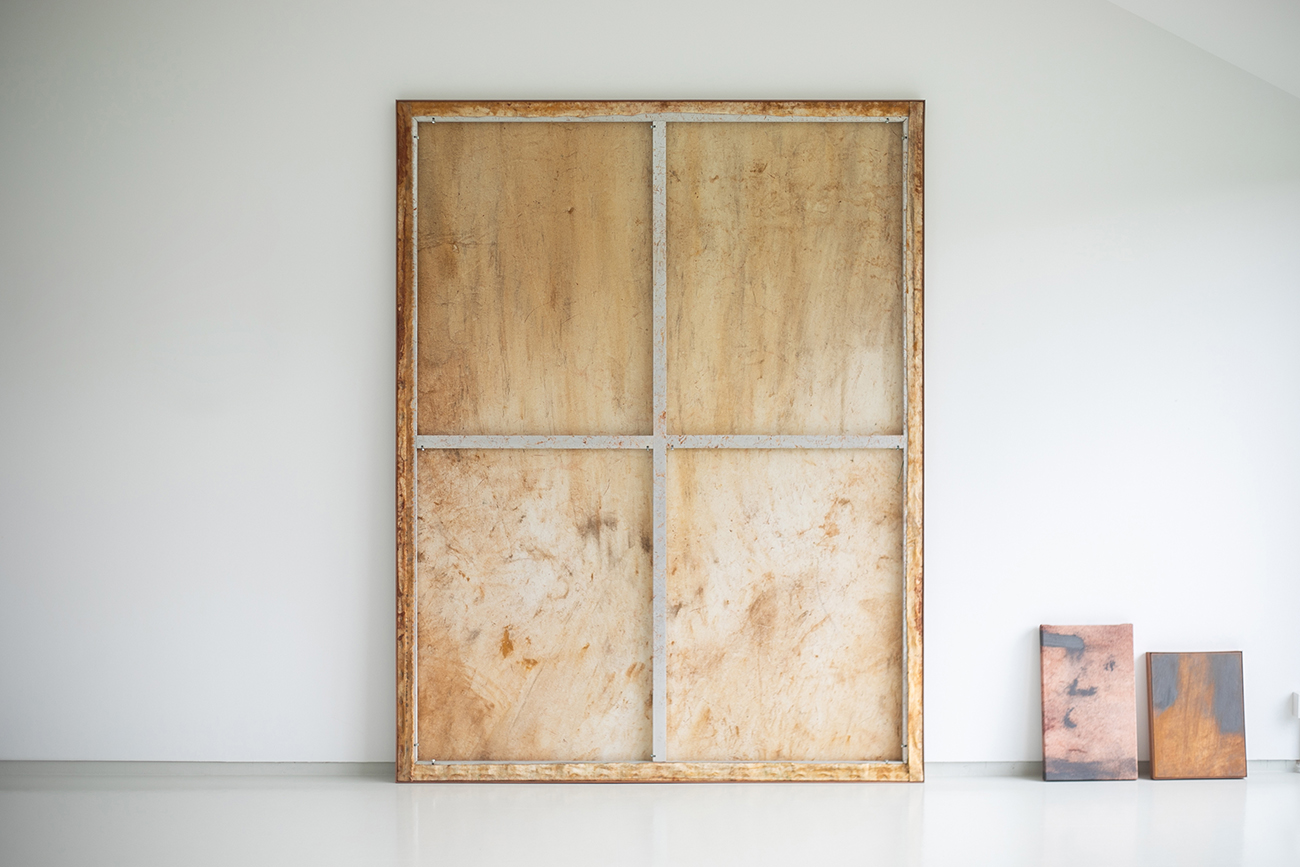 A hierro / 220x170#3. Back, by Carmen Verdú, 2024.
-
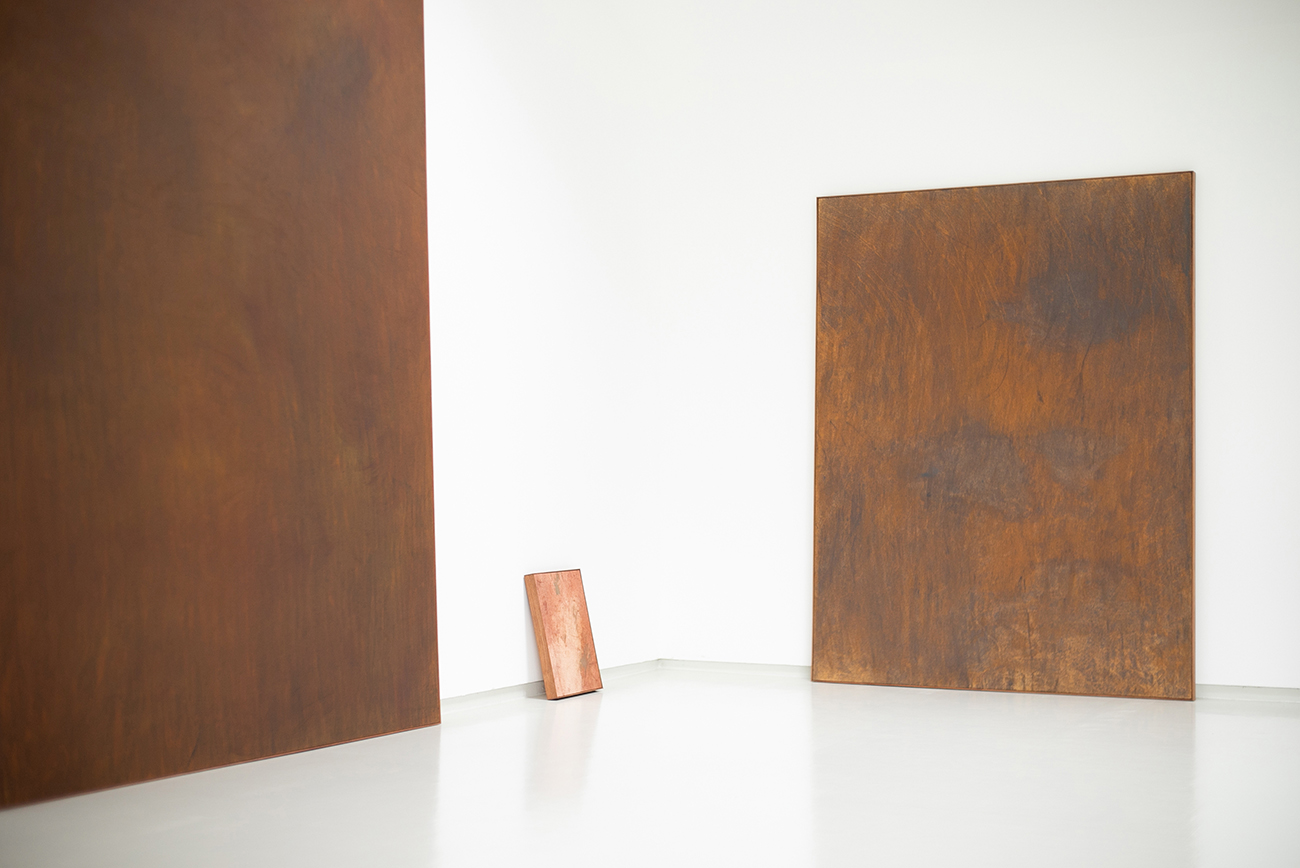 A hierro. Studio view, by Carmen Verdú, 2024.
-
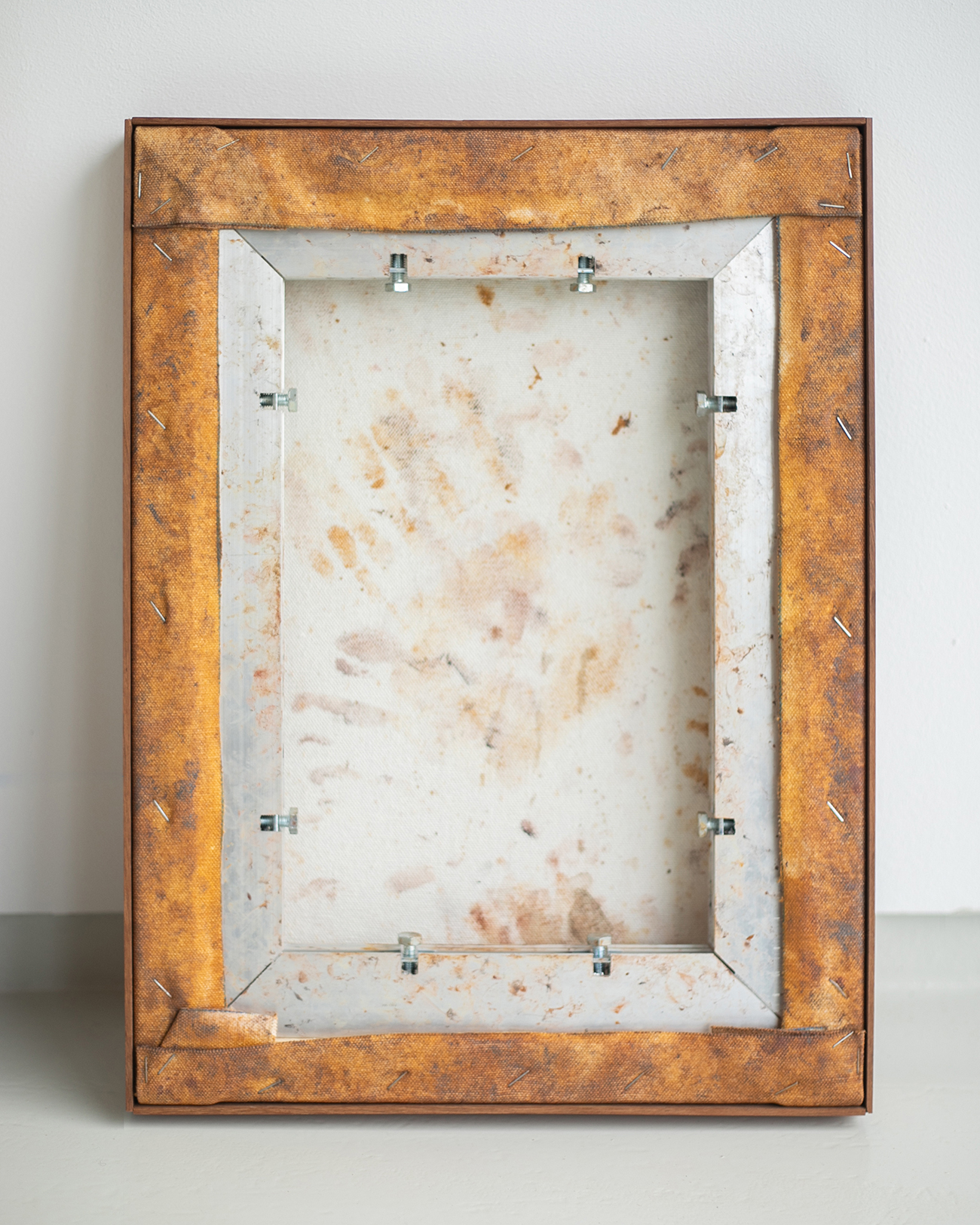 A hierro / 40x30#1. Back, by Carmen Verdú, 2024.
-
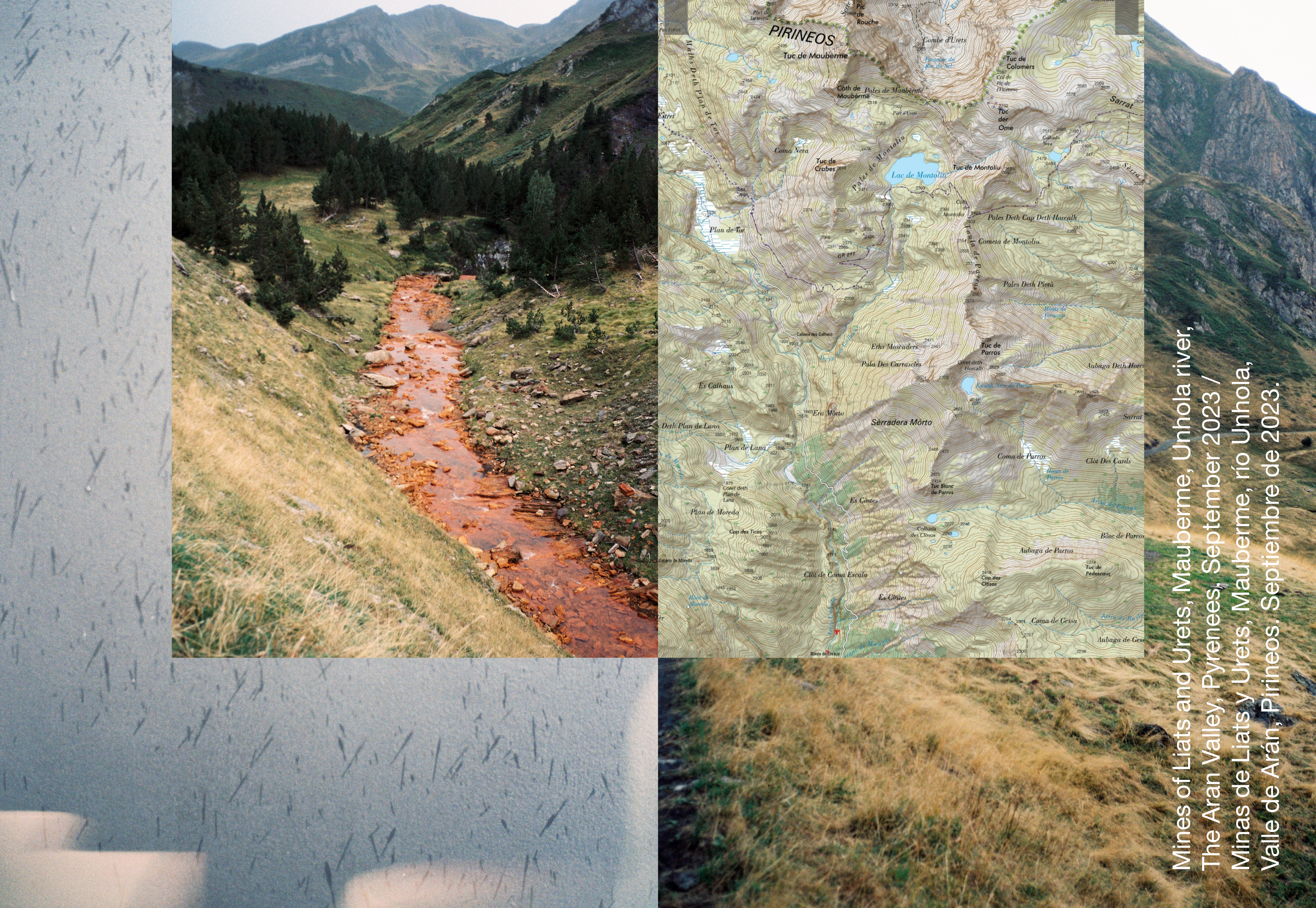 Publication. Download here.
irene grau. 'A hierro' (eng/esp). Photography: Carmen Verdú and Irene Grau.
Publication. Download here.
irene grau. 'A hierro' (eng/esp). Photography: Carmen Verdú and Irene Grau.